Shelf Decor Continuous Line Art
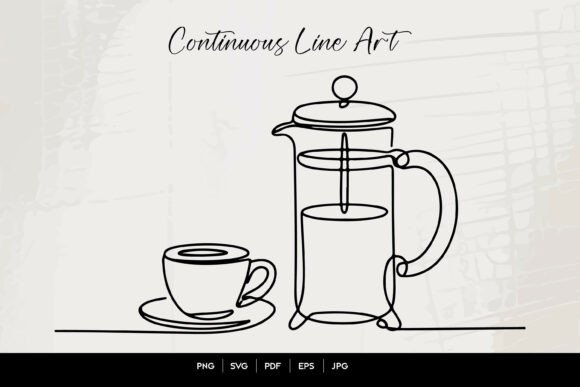
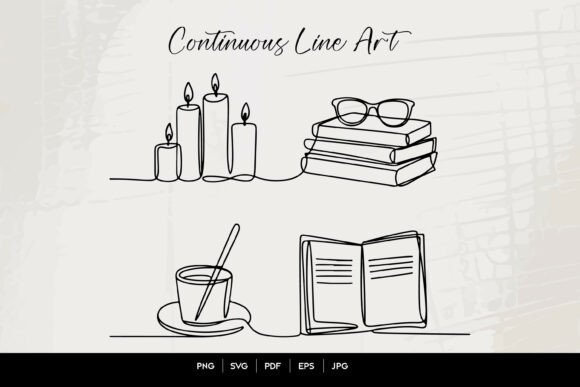
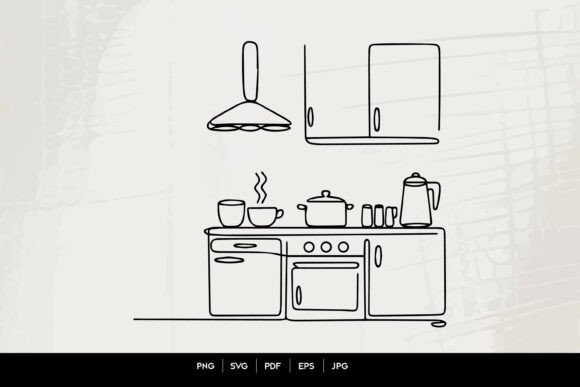
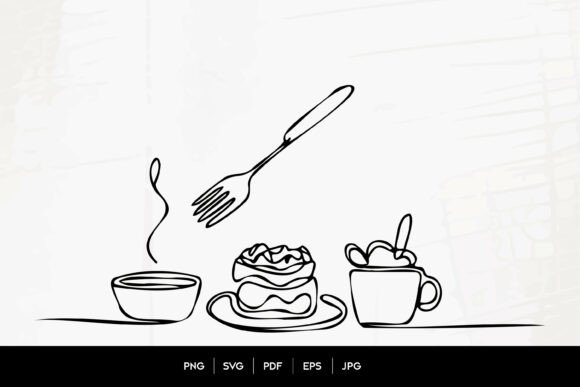
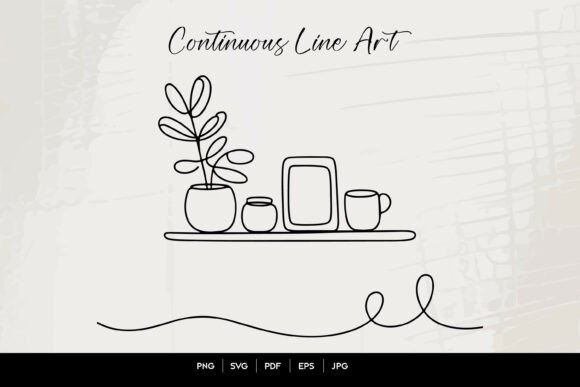
As a designer who’s stitched hundreds of custom projects—from boutique aprons to Etsy baby onesies—I opened Shelf Decor Continuous Line Art expecting clean minimalism. What I got was something more intentional: a quiet, confident outline that breathes space into any surface. It’s not just a line drawing of a shelf with potted plant, mug, and jar—it’s a visual pause. A single unbroken contour flows from base to top, looping around each object like a gentle hand guiding the eye. That continuity is its quiet superpower: no start, no end, just rhythm. It feels modern without trying too hard, monochrome without feeling flat, and minimalist without sacrificing warmth.
What This Design Actually Wants to Be on Fabric
I tested Shelf Decor Continuous Line Art as the centerpiece for a custom linen tea towel—hand-stitched first, then machine-embroidered on a mid-weight cotton blend. The result? Instant cohesion. Unlike busier motifs, this design doesn’t compete with texture or pattern; it complements it. On a natural-toned towel, the clean contour reads clearly even at 3.5 inches wide—no fill stitch needed, just a precise running or satin stitch along the path. It also translated beautifully onto a relaxed-fit organic cotton sweatshirt sleeve: subtle enough for adult buyers who dislike “crafty” graphics, yet distinctive enough to spark conversation (“Wait—is that *my* shelf?”).
This isn’t a design for maximalist tote bags or glitter-embellished baby caps. It’s built for intentionality: embroidered pillow covers in neutral nurseries, framed patches on denim jackets, minimalist mugs (as heat-transfer mockups), or small-batch kitchen towels sold at local craft fairs. Its strength lies in restraint—so it shines where clarity, calm, and quiet craftsmanship matter most.
Where It Stitches Well—and Where It Needs Extra Care
Shelf Decor Continuous Line Art performs reliably across common embroidery use cases—but only when matched thoughtfully to material and method.
- Custom apparel: Excellent on structured fabrics like canvas totes, twill aprons, and medium-weight sweatshirts. Avoid thin knits or high-stretch tees unless you reinforce with cutaway stabilizer and reduce stitch speed.
- Baby & nursery items: Ideal for crib sheets, muslin swaddles, or organic cotton bibs—provided the line weight stays above 0.8mm in your digitized version. Tiny corners (like the mug handle curve) need checking: too tight, and thread breaks; too loose, and the shape blurs.
- Patches & layered goods: Works cleanly as an embroidered patch on denim or canvas—but avoid dense backing layers that compress fine contours. Test stitch density: under 8,000 stitches keeps it light and flexible.
- Dark or textured fabric: On charcoal linen or bouclé throws, pair with matte white or ecru thread—not glossy silver. The monochrome nature means contrast is everything. Always preview in black-and-white mockups before finalizing.
It’s less suited for curved surfaces like baseball caps (the shelf’s horizontal lines distort easily) or ultra-fine garments like silk scarves (where even a 1.2mm line may overwhelm). And while it’s labeled “continuous lineart,” don’t assume automatic digitization—this is a graphics file set, not a ready-to-hoop embroidery file. You’ll need to digitize or commission digitization for machine embroidery use.
Why It Builds Trust—Not Just Decoration
Customers don’t buy line art. They buy *feeling*: calm mornings, curated spaces, handmade care. Shelf Decor Continuous Line Art delivers that quietly. When used on an Etsy listing for personalized kitchen towels, it signals attention to detail—not just “I added a logo,” but “I considered how this lives in your home.” That perception lifts perceived value. Buyers describe such pieces as “thoughtful,” “intentional,” “like it belongs”—not “cute” or “trendy.”
For craft businesses, that nuance matters. A cohesive shelf motif repeated across mugs, towels, and framed prints builds brand consistency without shouting. And because it’s vector-based (EPS, SVG), scaling stays crisp whether you’re embroidering a 2-inch pocket or printing a 12-inch wall decal. No pixelation. No guesswork.
Practical Designer Notes Before You Stitch
Before using Shelf Decor Continuous Line Art in your next project—or listing it as part of a digital product bundle—do these six things:
- Test on scrap fabric *first*, especially if stitching on textured weaves or dark backgrounds.
- Check thread color contrast: try matte black, oat, and soft sage on off-white linen—then reverse for dark fabric.
- Review stitch density in your digitized version: aim for smooth flow, not heavy buildup in curves.
- Confirm hoop size compatibility—this design scales well, but tiny versions (<2") risk losing shelf proportion and plant detail.
- Inspect corners and loops in your embroidery software: ensure no overlapping paths or unintended jumps.
- Verify licensing: since this is a Graphics file set (PNG, SVG, EPS, PDF, JPG), confirm commercial rights before selling finished embroidered products or bundling digitally.
And one last note: this design earns its keep not by being flashy, but by being *reliable*. It doesn’t distract. It doesn’t date quickly. It fits naturally into real homes, real wardrobes, real small shop inventories. Whether you’re an Etsy seller batching holiday towels or a studio embroidering bespoke nursery pillows, Shelf Decor Continuous Line Art is the kind of asset that quietly elevates your entire catalog—one clean, continuous line at a time.