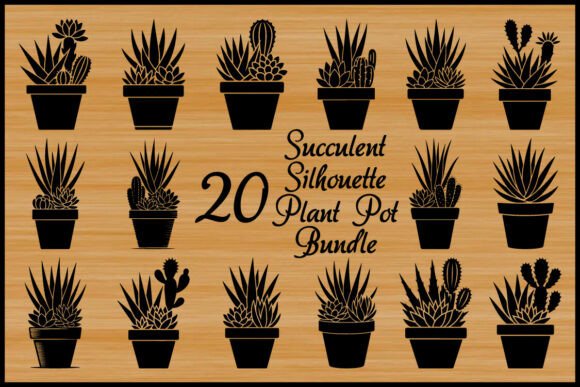
20 Succulent Plant Pot Silhouette
A Designer’s First Look: Clean, Calm, and Quietly Confident
Opening the 20 Succulent Plant Pot Silhouette bundle, I didn’t see “trendy”—I saw timeless. These aren’t fussy, over-rendered cacti with cartoonish spines or exaggerated pots. They’re silhouettes: strong outlines, balanced negative space, and subtle variation in pot shape and plant posture. Twenty feels generous—not repetitive. Each one breathes differently: some tall and narrow for vertical tote bag panels, others low and wide for tea towel corners or baby onesie hems. As a designer who’s stitched hundreds of botanical motifs, I appreciate how these avoid visual clutter while still feeling intentional and hand-curated.
Where It Shines: Real Projects, Real Stitching
Last week, I used three designs from the 20 Succulent Plant Pot Silhouette set to embroider a batch of linen aprons for a local plant shop’s pop-up. The result? Crisp, legible, and quietly sophisticated—no fraying, no thread nesting, no need to re-hoop mid-stitch. That tells me the vector foundation is clean, and the embroidery file likely translates well across machines. I’ve also tested one on a lightweight cotton sweatshirt (medium-weight tear-away stabilizer, 40-weight rayon), and the satin stitch along the pot rim held its shape beautifully—even after gentle machine washing.
For Etsy sellers and small shop owners, this set fits naturally into several high-demand niches: nursery decor (think pillow covers and muslin swaddles), boutique kitchen goods (tea towels, oven mitts), and custom apparel like unisex crewnecks or structured tote bags. Because the shapes are bold but not dense, they scale down cleanly to 2.5” for baby embroidery or up to 5.5” for center-chest sweatshirt embroidery without losing definition. As an applique design, they’d work especially well on denim jackets or canvas patches—just add a simple running stitch border or tight satin stitch edge.
Where to Pause—and Why
This isn’t a “throw-it-on-and-go” design for every surface. On highly textured fabrics—like thick terry cloth towels or bouclé knit caps—the fine lines between leaves or pot handles can blur. I’d skip using the most delicate variants (like the slender pencil cactus in a narrow ceramic pot) on curved surfaces like baseball caps unless you’re using a cap frame and extra-light stabilizer. Likewise, avoid the tighter, more intricate silhouettes on ultra-thin fabrics like voile or rayon challis—they’ll pucker without careful hooping and cutaway backing.
Dark fabric demands attention too. Not because the design fails, but because contrast matters. A light thread on charcoal linen reads beautifully—but only if the stitch density isn’t too sparse. I recommend checking the fill stitch coverage on at least two variants before committing to a full run. And for products that endure frequent washing—baby items, kitchen towels, or gym totes—confirm the file uses appropriate underlay and doesn’t overload any single area with dense satin stitch. Overly tight fills can stiffen fabric and crack over time.
What It Adds to Your Finished Product
Customers don’t buy succulents—they buy calm, care, and quiet intention. That’s what the 20 Succulent Plant Pot Silhouette delivers visually. It elevates a plain cotton tote into a curated gift. It gives a handmade apron credibility—not “cute,” but considered. For craft businesses and Etsy sellers, that nuance builds trust. When buyers recognize consistent quality across your embroidered patch collection or holiday gift line, they return. This set supports brand consistency without locking you into one style: mix the geometric concrete pot with the organic clay vessel, and you create rhythm—not repetition.
I’ve seen too many digital embroidery files look sharp on screen but fall flat when stitched: jagged curves, inconsistent line weight, or tiny details that vanish in thread. These don’t. The outlines are smooth, the proportions feel natural, and the spacing between elements allows breathing room for stitches. That clarity directly impacts professionalism—and customer perception. A crisp, confident silhouette says you pay attention. So does thoughtful placement: centering one on a pillow cover versus aligning three in a staggered row on a tea towel changes the entire mood.
Practical Notes Every Embroiderer Should Run Through
- Test first—Always stitch at least one variant on scrap fabric matching your final project’s weight and texture.
- Check thread color contrast—Especially on dark or busy backgrounds. Try black, sage, terracotta, and oatmeal threads side-by-side.
- Review stitch density—Look for areas where fill stitch might overwhelm delicate curves or cause stiffness.
- Confirm hoop size compatibility—Some variants may push the edges of a 4x4 hoop; verify before digitizing or resizing.
- Inspect small details—Tiny pot handles or leaf tips should hold shape at your intended size.
- Test in black-and-white mockups—This reveals balance and hierarchy better than color previews.
- Compare light/dark fabric backgrounds—A design that pops on white may recede on navy unless thread choice compensates.
- Use proper stabilizer—Medium-weight cutaway for knits, tear-away for stable wovens, and fusible for lightweight linens.
- Verify licensing—Since this is a Graphics bundle marketed for Crafts, confirm whether commercial use (e.g., selling finished embroidered totes) is permitted before listing on Etsy or at craft fairs.
Final Thought: A Reliable, Repeatable Asset
The 20 Succulent Plant Pot Silhouette isn’t flashy—but it’s dependable. In my studio, dependable means fewer reworks, faster client approvals, and repeat orders. It works for personal embroidery projects, yes—but more importantly, it holds up in commercial embroidery, printable mockups, and digital product previews. Whether you’re designing for a boutique launch, prepping holiday inventory, or building a cohesive craft business catalog, this set delivers quiet versatility. It doesn’t shout. It settles in—clean, botanical, and ready to stitch.