Home Office Essentials Silhouette Set
A Designer’s First Look: Clean, Calm, and Quietly Confident
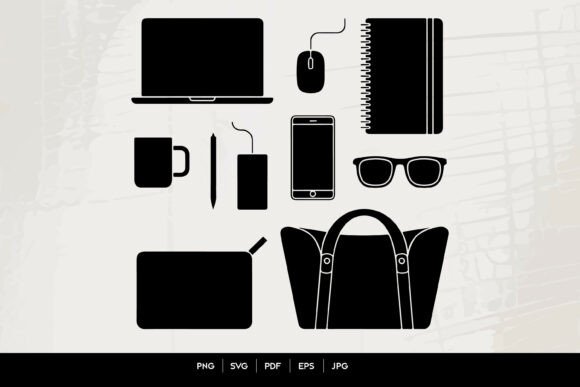
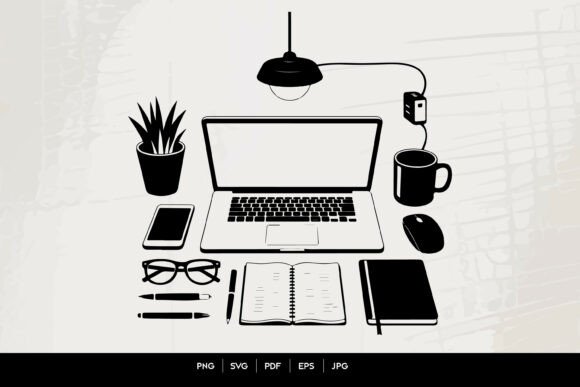
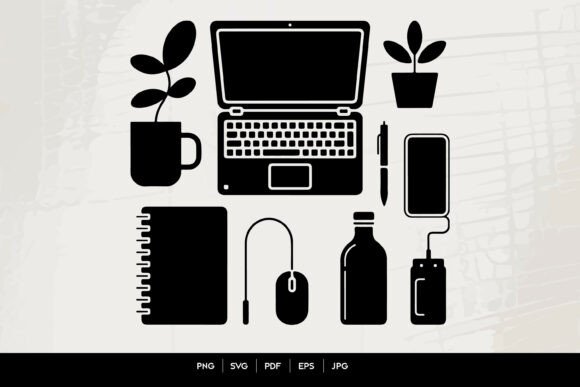
Opening the Home Office Essentials Silhouette Set, I didn’t see clutter—I saw calm. No busy outlines, no exaggerated shadows or cartoonish flair. Just crisp, intentional silhouettes: a minimalist laptop, a compact keyboard, a tidy mug beside a small potted plant, a notebook with a single pen resting across it. It’s not “techy” or “corporate.” It’s human-scale, grounded, and quietly warm—exactly what you’d want stitched onto a handmade tote bag for a teacher launching her online course, or embroidered on a linen pillow cover for a new remote worker’s nursery corner.
Where This Set Fits Best (and Where It Doesn’t)
I recently tested a few pieces from the Home Office Essentials Silhouette Set on a heavyweight cotton canvas tote—stitched in matte black thread with light tear-away stabilizer. The result? Sharp, legible, and effortlessly professional. The mug silhouette held its curve without distortion; the smartphone outline stayed clean at 3.2 inches wide. That tells me this set shines in custom apparel, embroidered patch applications, and tote bag design—especially for craft businesses targeting educators, freelancers, wellness coaches, or hybrid workers.
It also works beautifully on baby embroidery—think a soft gray onesie with just the tiny plant + water bottle combo—but only if placed on flat, stable fabric. Avoid using the full multi-element layout on curved surfaces like caps or stretchy knit sweatshirts unless you simplify to one or two elements and adjust placement carefully. The silhouettes have gentle curves, not sharp angles, so they’re forgiving on slightly textured fabrics like terry cloth tea towels—but skip dense fill stitch areas on thin cotton poplin unless you add cutaway stabilizer underneath.
What Real Stitching Reveals (That PNG Previews Hide)
Here’s what you won’t know until you actually run the Home Office Essentials Silhouette Set through your machine: how those fine negative spaces hold up. The gap between keyboard keys? Still readable at 2.5 inches wide—but disappears below 1.8 inches. The charger cord’s subtle taper? Gets lost on dark fabric unless you use high-contrast thread or add a satin stitch border. And that little leaf on the plant? It’s delicate—not fragile, but it needs a steady hoop size and minimal fabric movement.
This isn’t a “throw-it-on-and-go” embroidery file. It rewards attention. Test it first on scrap fabric matching your final project—same stabilizer, same thread weight, same tension. Run it in black *and* white mockups to check recognition. Try it on both light and dark backgrounds: some silhouettes (like the notebook or mug) gain quiet sophistication on charcoal; others (the smartphone, charger) read stronger on cream or oat.
Smart Pairings for Handmade Products
- Sweatshirt embroidery: Use just the laptop + plant combo centered on the chest—clean, balanced, and gender-neutral.
- Personalized gift: Add a monogrammed initial beside the coffee mug on a linen kitchen towel—subtle, useful, memorable.
- Etsy seller asset: Layer the notebook + pen silhouette behind a handwritten quote in your printable mockup—elegant, cohesive, instantly relatable.
- Boutique branding: Resize the water bottle + plant pair for a woven label on organic cotton aprons—quietly reinforces values without shouting.
What This Set Says About Your Craft Business
When customers see the Home Office Essentials Silhouette Set stitched cleanly on a finished product, they don’t just register “office stuff.” They register care. Intention. A designer who understands that working from home isn’t about gadgets—it’s about rhythm, comfort, and small daily anchors. That perception lifts perceived value. A $28 embroidered tote feels like a considered gift, not a generic promo item. An Etsy listing featuring this set gains trust because the visuals feel authentic—not stock, not rushed, not overly cute.
But that only holds if execution matches intent. If the stitch density is too high and the fabric puckers, or if the mug’s handle blurs into the background, the message fractures. So always review stitch density before sending to production. Confirm licensing terms—this is a digital embroidery file, not a royalty-free commercial license by default. If you’re selling finished products or digital design assets, verify usage rights first.
Practical Notes Every Embroidery Designer Should Keep Handy
- Test before committing: Run one element (e.g., the mug) on your exact fabric + stabilizer combo—even if it’s “just a sample.”
- Thread color matters more than you think: Matte charcoal on natural linen reads warmer and more handmade than glossy black. Try both.
- Hoop size isn’t optional: The full set layout needs at least a 4×4 hoop. Smaller placements? Isolate single icons and resize proportionally—don’t squash.
- Stabilizer choice changes everything: Light tear-away for stable canvas; cutaway for knits or lightweight cottons; no-show mesh for sheer layers.
- Check corners and curves: Zoom in on the SVG or EPS file—the plant’s leaves and charger cord taper should be smooth, not pixelated or jagged.
- Think beyond embroidery: These silhouettes work beautifully as laser-cut wood shapes, vinyl decals, or printed iron-ons—making them versatile design assets for your craft business.
Final Thought: Not Just Graphics—A Quiet Design Language
The Home Office Essentials Silhouette Set doesn’t scream. It settles. It fits naturally into real life—not as decoration, but as quiet punctuation. For embroidery designers building a portfolio of thoughtful, wearable, giftable work—and for Etsy sellers, small shop owners, and creative entrepreneurs shaping a brand around authenticity—it’s a rare find: a machine embroidery design that supports meaning instead of competing with it. Just remember: its strength lies in restraint. Let the simplicity speak. Then stitch it with intention.