Gentle Fuel Art: A Warm, Thoughtful Embroidery Design Worth Your Thread
First Impressions: Calm, Cozy, and Quietly Confident
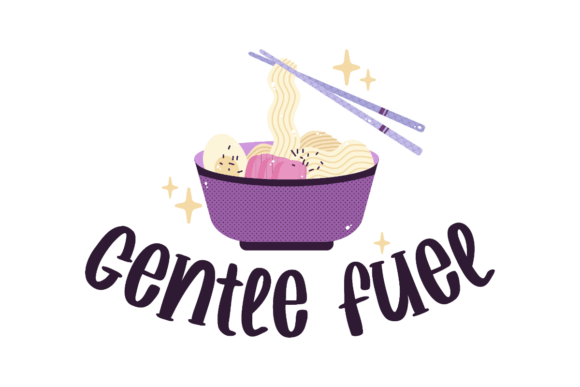
When I opened Gentle Fuel Art for the first time, I didn’t see just a ramen bowl—I saw intention. The warm purple bowl, soft steam curling upward, chopsticks resting at just the right angle—it’s not loud or trendy. It’s grounded. Kind, even. That phrase “Nourish yourself with kindness” isn’t tacked on; it’s baked into the composition. As an embroidery designer who’s stitched everything from hyper-detailed florals to minimalist logos, I immediately sensed this design would shine in projects where emotional resonance matters more than flash—think handmade baby blankets, slow-living tote bags, or quiet-corner aprons for small-batch bakers.
A Real-World Test: Stitching It onto a Linen Tea Towel
Last week, I used Gentle Fuel Art on a natural linen tea towel for a local café’s holiday gift set. Why that combo? Linen’s subtle texture pairs beautifully with the design’s gentle curves—and because the bowl sits centrally with clean negative space around it, the embroidery didn’t fight the fabric grain. I chose matte cotton thread in deep plum and warm taupe, avoiding shiny poly that would clash with the design’s softness. The result? A finished product that felt handmade—not machine-made. Customers paused when they saw it. Not because it was flashy, but because it *felt* like something you’d want to hold, use, and keep.
Where Gentle Fuel Art Truly Shines
- Custom apparel: Works especially well on relaxed-fit sweatshirts and organic cotton tees—its medium-scale proportions (neither too tiny nor overwhelming) land perfectly over the left chest or upper back.
- Tote bag design: Centered on canvas or heavyweight cotton duck, it reads clearly from across a farmers’ market aisle—no squinting needed.
- Baby embroidery: On a gauzy muslin swaddle or knit onesie, its rounded shapes and open spacing avoid stiffness—critical for delicate skin and frequent washing.
- Embroidered patch: Clean outlines and minimal interior detail make it ideal for iron-on or sew-on patches on denim jackets or backpacks.
- Holiday embroidery & personalized gifts: Paired with a handwritten tag (“For your gentle days”), it becomes a meaningful alternative to cliché seasonal motifs.
Where to Proceed With Care
Gentle Fuel Art is thoughtful—but it’s not universally forgiving. Here’s where attention matters:
- Small hoop sizes: The bowl’s width and chopstick length mean it needs breathing room. Don’t force it into a 3x3" hoop without checking scale—distortion kills its calm vibe.
- Textured or stretchy fabric: On slubbed knits or ribbed cotton, test stitch density first. Too many fill stitches in the bowl’s base can cause puckering; consider simplifying with a lighter satin stitch or strategic running stitch accents.
- Dark fabric: The purple bowl relies on tonal contrast—not stark black-and-white. On charcoal or navy, choose thread shades with warmth (e.g., burgundy, eggplant) rather than cool grays.
- Curved surfaces (like caps): The chopsticks’ fine ends may shear or distort unless digitized with curve compensation—or better yet, repositioned slightly inward for stability.
- Frequent-wash items: Because it celebrates nourishment and care, customers will expect durability. Use quality stabilizer (cutaway for knits, tear-away for wovens) and avoid overly dense fill areas near the steam line.
Design Integrity Meets Customer Trust
In my craft business, every embroidered item carries my name—even when sold through Etsy or boutique consignment. Gentle Fuel Art supports that trust. Its balanced stitch density avoids the “overloaded” look common in rushed digital embroidery files. No jagged edges. No floating threads. The bowl’s rim has consistent satin stitch coverage, and the steam uses light fill or running stitch—just enough to suggest movement without bulk. That translates directly to how customers perceive value: a $48 embroidered pillow cover feels intentional, not mass-produced. And for Etsy sellers? This design invites storytelling in listings—“for the quiet moments,” “for the cook who gives generously”—which lifts engagement far beyond generic keywords.
Practical Designer Notes Before You Stitch
- Always test Gentle Fuel Art on scrap fabric matching your final project’s weight and stretch.
- Check thread color contrast on both light and dark backgrounds—especially if offering multiple product variants.
- Review stitch density in the bowl’s center and chopstick tips. Adjust if needed for your fabric + stabilizer combo.
- Confirm hoop size compatibility before digitizing or resizing—don’t assume it fits standard commercial hoops without verification.
- Inspect small details in black-and-white mockups. Does the steam read as air or clutter? Do chopstick ends stay distinct?
- Use proper stabilizer: cutaway for knits, tear-away for stable wovens, and lightweight mesh for sheer fabrics.
- If selling finished products commercially, verify licensing terms—Gentle Fuel Art is a Graphics asset in the Crafts category, so confirm whether resale of physical items is permitted.
Final Thought: More Than a Ramen Bowl
Gentle Fuel Art isn’t about food—it’s about pause. About choosing softness in a noisy world. That makes it unusually versatile: equally at home on a nursery wall hanging, a therapist’s office pillow, or a small-batch coffee roaster’s apron. It doesn’t shout. It settles in. And in embroidery—where every stitch carries weight—that kind of quiet confidence is rare, valuable, and deeply wearable. Whether you’re building a craft business, curating a holiday collection, or stitching a gift that says *I see you*, this design earns its place in your embroidery project queue—not as filler, but as foundation.